Thursday, 13 February 2014

Your Thyroid and Weight loss – The Connection is Real


Your thyroid dictates much of your metabolism, any malfunction or disease afflicting this area may cause you to have problems in metabolism leading to a drastic problem with your weight – you may either gain weight, lose weight, or may find that losing weight is harder than usual.

Those that plan diets do not take into consideration how their thyroids and metabolism may affect their weight loss program. Most experts and even the media pitch in and recommend that the best way to lose weight is cut calories.

Those with a condition called hyperthyroidism suffer from an overactive thyroid leading to one having his or her metabolism skyrocket. If this is the case, then you will probably lose weight fast. This is a nice proposition for some who wish to lose weight. However, this is actually hazardous to the health.

Aside from the medical difficulties such a disease brings, one will also notice weight problems as a result. These people have trouble keeping on weight and may notice weakness and bulging of the eyes. This disease may need special treatment from doctors.

Hypothyroidism on the other hand works in the other direction – slowing metabolism until the body gains weight at an incredible rate. Like hyperthyroidism, hypothyroidism causes a general weakness in the body. It too may need special treatment and may cause serious health problems if left unattended.

While cutting calories in itself can be very hard for most people – imagine, the people involved in life and death struggles at the supermarket regarding whether to buy that extra box of sweets, some have exactly the opposite problem.

Instead of eating too much calories – which is a problem in itself, they eat too little calories instead.

Problem? What Problem
The problem with some is that they believe that since the experts say that they have to cut calories, cutting calories to an inordinate amount will reap greater results. Unfortunately, it doesn’t work that way. While cutting calories helps diets, consuming too little calories pushed the body into a hoard mode, the body’s metabolism slow to adapt to the lesser amount of available energy.

If your body enters this mode, your body will work at such slow metabolism that losing weight becomes impossible.  The technique here should be to reduce calories without the body slowing its metabolism. Only then can losing weight become easier.

Another problem that can arise from decreased metabolism is that when your metabolism slows due to a drastic reduction in metabolism, and then you suddenly eat a good, hearty, calorie-filled meal, you are bound to gain more weight owing to the increased surplus of energy.

This is why an imbalanced meal is highly discouraged among those that seek to lose weight. The sudden loss and increase of calories will cause an imbalance in one’s energy consumption directly affecting fat deposit.

Here is a simple computation to help you get to the right amount of calories you will need per day so that you get your nutrients in the right balance.

First of all, multiply your weight in kilograms by 30. If you only know your weight in pounds, divide it by 2.2 to get to its English equivalent. We divide this number by 30 because that is the number of calories you need to maintain your weight per pound of weight.

For example if your weight in pounds is 150, divide it by 2.2. That will give you a figure of 68.18. This is your weight in kilograms. Multiply this by 30 and you will arrive at the amount of calories you will need per day to maintain 150 lbs.

You may consult a nutritionist to help you come lose weight. In the end it all comes down to math. If you consume more that your body needs, it stores it as fat. Now is probably a good time to start studying the back of those grocery cartons.

Try to keep your diet at a 40% protein, 25% fat, and 35% carbohydrate meals at 300 calories per meal. Spread out these meals in a day for optimum results.

While it may be simple computation to get at numbers, do not forget the earlier mentioned fact that the body adapts to its condition. Expose it to extreme ones and you may find yourself getting results you never wanted. Consult a nutritionist for more advice.

THE GROWTH AND POWER OF APPETITE.


 One fact attendant on habitual drinking stands out so prominently that none can call it in question. It is that of the steady growth of appetite. There are exceptions, as in the action of nearly every rule; but the almost invariable result of the habit we have mentioned, is, as we have said, a steady growth of appetite for the stimulant imbibed. That this is in consequence of certain morbid changes in the physical condition produced by the alcohol itself, will hardly be questioned by any one who has made himself acquainted with the various functional and organic derangements which invariably follow the continued introduction of this substance into the body.

But it is to the fact itself, not to its cause, that we now wish to direct your attention. The man who is satisfied at first with a single glass of wine at dinner, finds, after awhile, that appetite asks for a little more; and, in time, a second glass is conceded. The increase of desire may be very slow, but it goes on surely until, in the end, a whole bottle will scarcely suffice, with far too many, to meet its imperious demands. It is the same in regard to the use of every other form of alcoholic drink.

Now, there are men so constituted that they are able, for a long series of years, or even for a whole lifetime, to hold this appetite within a certain limit of indulgence. To say "So far, and no farther." They suffer ultimately from physical ailments, which surely follow the prolonged contact of alcoholic poison with the delicate structures of the body, many of a painful character, and shorten the term of their natural lives; but still they are able to drink without an increase of appetite so great as to reach an overmastering degree. They do not become abandoned drunkards.

 No man safe who drinks. ----------------------

 But no man who begins the use of alcohol in any form can tell what, in the end, is going to be its effect on his body or mind. Thousands and tens of thousands, once wholly unconscious of danger from this source, go down yearly into drunkards' graves. There is no standard by which any one can measure the latent evil forces in his inherited nature. He may have from ancestors, near or remote, an unhealthy moral tendency, or physical diathesis, to which the peculiarly disturbing influence of alcohol will give the morbid condition in which it will find its disastrous life. That such results follow the use of alcohol in a large number of cases, is now a well-known fact in the history of inebriation. The subject of alcoholism, with the mental and moral causes leading thereto, have attracted a great deal of earnest attention. Physicians, superintendents of inebriate and lunatic asylums, prison-keepers, legislators and philanthropists have been observing and studying its many sad and terrible phases, and recording results and opinions. While differences are held on some points, as, for instance, whether drunkenness is a disease for which, after it has been established, the individual ceases to be responsible, and should be subject to restraint and treatment, as for lunacy or fever; a crime to be punished; or a sin to be repented of and healed by the Physician of souls, all agree that there is an inherited or acquired mental and nervous condition with many, which renders any use of alcohol exceedingly dangerous.

The point we wish to make with you is, that no man can possibly know, until he has used alcoholic drinks for a certain period of time, whether he has or has not this hereditary or acquired physical or mental condition; and that, if it should exist, a discovery of the fact may come too late.

Dr. D.G. Dodge, late Superintendent of the New York State Inebriate Asylum, speaking of the causes leading to intemperance, after stating his belief that it is a transmissible disease, like "scrofula, gout or consumption," says:

"There are men who have an organization, which may be termed an alcoholic idiosyncrasy; with them the latent desire for stimulants, if indulged, soon leads to habits of intemperance, and eventually to a morbid appetite, which has all the characteristics of a diseased condition of the system, which the patient, unassisted, is powerless to relieve since the weakness of the will that led to the disease obstructs its removal.

"Again, we find in another class of persons, those who have had healthy parents, and have been educated and accustomed to good social influences, moral and social, but whose temperament and physical constitution are such, that, when they once indulge in the use of stimulants, which they find pleasurable, they continue to habitually indulge till they cease to be moderate, and become excessive drinkers. A depraved appetite is established, that leads them on slowly, but surely, to destruction."

Quick Tips to Boost Your Metabolism


There are a lot of people who would give a lot to increase their metabolism. Having a high level of metabolism enables one to maintain burn fat and lose weight fast with the least amount of activity. Metabolism is the rate by which the body produces and consumes energy and calories to support life.

There are several factors that affect the metabolism of a person, such as the amount of muscle tissue, the frequency of the meals one consumes, genetics, stress levels, personal diet and activity levels. Metabolism slows done due to the following: loss of muscle because of not enough physical activity, the tendency of the body to cannibalize its own tissue because there is not enough food energy to sustain it, and the decrease of physical activity that comes naturally with old age.

Here are several ways to fire up one's metabolism:

1. Build up on lean, mean body mass. It is only natural that metabolism decreases along with age, but it is possible to counter the effects. The amount of muscle a person has is a very strong determinant in the ability to burn calories and shed fat. So it goes without saying that exercise is essential. Build strength and resistance by working out at least twice a week, preferably with weights. Do easy exercises in between workouts. Simple tasks such as walking the dog and using the stairs in place of the elevator can already take off calories. The key is to match the amount of eating to the amount of activity one has. Here are some guidelines in getting the right exercise:

For strength training

-Increase the amount of repetitions of a particular exercise.
-Add the level of resistance
-Utilize advance exercise techniques if possible

For cardiovascular training

-Insert intervals between exercises
-Perform cross-training and combine the exercises
-Add up on resistance and speed


2. Eat breakfast. A lot of people are ignoring the fact that breakfast is the most important meal of the day. Surprisingly, the ones who eat breakfast are thinner than the ones who do not. Metabolism can slow down considerably if breakfast is taken during mid-morning or if one waits until the afternoon to eat.

3. Avoid sugar. Sugar enables the body to store fat. It is recommended that a person consumes food that helps sustain an even level of blood-sugar. Additionally, progressive execerise 2-3 times a week should be in order to stabilize blood sugar.

4. Eat spicy foods. Hot cuisine with peppers can increase metabolism.

5. Sleep more. According to research, it is riskier for people who do not get enough sleep to gain weight. Also, muscles are regenerated during the last couple of hours of slumber.

6. Increase water intake. Water flushes out toxins that are produced whenever the body burns fat. Majority of bodily functions involves water, and lack of water causes the body system's operations to decrease its speed, and produces unneeded stress as a result.

7. Eat smaller meals. It is advisable to consume 4 to 6 small meals that are timed 2 to 3 hours apart.

8. Never skip meals. People tend to skip meals in order to lose weight, which is a big mistake since it slows down metabolism.

9. Plan meals in detail. Always prepare the right amount of food to be consumed at the designated intervals. Do not commit the mistake of eating meals in sporadic patterns.

9. Ditch the stress! Stress, be it physical or emotional, triggers the release of a steroid called cortisol, which decreases metabolism. Also, people tend to eat excessively when stressed.

10. Guzzle up on green tea. It can be used as a substitute for coffee. Tea has the ability to stimulate metabolism, and unlike coffee, it has no undesirable side effects when too much is consumed.

11. Include more energy foods in the diet, such as fruits and vegetables, beans and whole grains.

Achieving the desired body weight is never impossible if one has the determination and patience needed to stabilize the metabolism level, which plays an important role in weight loss. A person needs to realize that eating right and working out is not just a passing fancy, but a way of life.

Importance of Warming Up Before Exercise


Since a lot of people are involved in physical exercises, it is imperative that the importance of warming up before any strenuous activity should be discussed. Many have repeatedly ignored going through the warm up stage before working out, not knowing the consequences in doing so.

Why warm up? Several changes takes place in the body once physical activity is initiated. A person's respiratory rate, blood flow, and oxygen and nutrient levels delivered to the cells increases. The rate of increase should be regulated in a steady pace to prepare the body for the physical stress that exercise will demand. If one foregoes this priming procedure, the body will function less efficiently and the workout will produce less quality results. Warming up preps up the nervous system, heightens mental awareness and alertness, and loosens up joints and muscles to make them less prone to injuries. Warm ups jump starts the fluid located in the joints, minimizing the risk for wear and tear of the muscles. It gives the heart a suitable period to adjust and pump up blood and nutrients into muscles.

This is vital for older people, since they have tissues that are less supple; they have joints with less fluid, and weaker hearts. Sudden exercise can produce heart attacks to older people.

How does a person warm up properly? Initially, it can be done in any procedure that enables the heart to beat faster. One can simply walk and jog, or if a cardiovascular equipment is available, such as rowing machine or a bicycle, it can be utilized. Start at a gentle pace, and then slowly increase the pace until heart beat rate increases and the body temperature rises. It important to note that the pace should be in accordance to one's current fitness level, where the activity will leave the person energized and not exhausted.

After working up a light sweat (suggested time is 3-5 minutes, longer if the person is working out in a cold environment) one should do dynamic stretching. Stretching helps in developing overall flexibility, particularly in the spine, shoulder, and hip areas. The kind of stretching depends on the type of activity a person plans to engage to. For instance, if one is about to play sports, the recommended kind of stretching would be the ones that mimics the movements that will be done in the court or field. If one is about to do martial arts, light sparring can be done in the quarter of the normal speed, or just simply do the movements in slow motion. Be certain that the major muscles groups are stretched for 8 seconds minimum. It is necessary to remember to keep feet moving or do leg exercises whenever the upper body is stretched to keep prevent blood from pooling in the legs. Remember, one should only do stretching if the muscles are already warmed up. Do not bounce while stretching. It leads to a contraction that can result in muscle tear or pull.

For weight-lifters, this is what should be done after the initial warm up. Load the bar with about 50-60% of the heaviest weight to be done for the session and perform the number of repetitions that will be done for the heavy sets. For the second set, the weight will be increased to 80%, then eventually to 90%, decreasing to 2-3 repetitions. Afterwards, rest for about 30 seconds, then repeat the steps. After this warm up, one can now proceed to the heavy lifting for the day. The advantage of doing the procedure is that the heavy sets will feel less daunting and can now be performed with considerably less stress.

After warming up and proceeding to the main workout, it is equally important to cool down. When a person suddenly stops exercising or lifting weights, blood gathers in the muscle and oxygen is blocked. When this happens, a person runs the risk of having a heart attack. So cooling down should have the same importance as warming up.

Exercise is good for the health. Everyone is encouraged to pump it up, just remember to remember all the necessary precautions not only to maximize the workout, but also to stay safe and healthy.   

How to Read Food Labels


You cannot measure every morsel that passes your lips, but it is a good idea to measure most foods and beverages until you get a feel for portion sizes.

It is a supersized world out there, and most people are surprised to find that their idea of a single serving is actually two or three.

If you are into bells and whistles, there are food scales that are preprogrammed with nutritional information, as well as scales that will keep a running total of your daily food and nutrient intake for you. The only tools you really need, however, are a simple and inexpensive gram scale, dry and liquid measuring cups, and idea on reading food labels.

Among all of the mentioned tools, reading food labels seem to be the most effective way of determining the right kind of food to be bought in the supermarket. It lets you make sensible food selections. Through the “Nutrition Facts” section in a particular item in the grocery, you can identify the amount of serving sizes provided in that product.

With food labels, you can clearly understand the amount and kinds of nutrients that are provided in the item. Usually, it contains the information on saturated fat, sodium, total fat, fiber, and cholesterol amount “per serving.”

However, understanding and reading these food labels can be very perplexing. A typical consumer would definitely ask what those numbers mean and how it will affect her diet intake if ever she will religiously follow the serving guide as stipulated on the food label.

To further have a clear and more comprehensive understanding of the items stated in the food label, here is a list of things that you need to know:

1. Serving size

This is the primary item you will see in a food label.

The amount of servings stated in the food label refers to the quantity of food people usually consume. However, this does not necessarily mean that it reflects your very own amount of food intake.

Moreover, serving size determines the amount of nutrients that enters the body. This means that if you will follow strictly what the serving size is, you will obtain the same amount of nutrients according to the serving size that was given in the label.

For instance, if the serving size says one serving size is equal to 54 grams, that would mean you have to measure 54 grams and eat that and you have just eaten one serving. So to speak, the amount of nutrients stated in the food label is the same amount that has entered your body considering the fact that you have just eaten 54 grams.

However, if you have eaten everything, and the food label says that each pack is equivalent to 4 servings, you have to calculate the amount of nutrients that have entered your body. This means that if the food label says 250 calories per serving that means you have to multiply it to four to get the total amount of calories you have taken.

2. Nutrients

This refers to the list of available nutrients in a particular item. It is also where the nutritional claims of the product based on the recommended daily dietary allowance are stated. Usually, the nutritional amounts are based on both the 2,500-calorie diets and the 2,000 recommended dietary allowances.

In order to understand the numeric value of each item, you should know that the “% daily value” that the food label indicates is actually based on how a particular food corresponds to the recommended daily dietary allowance for a 2,000 calorie.

If in the event that you have purchased an item that has a dietary allowance different from the 2,000-calorie diet, you just have to divide the stipulated amount by 2,000 and you will be able to identify the “%daily value” for the nutrients.

3. Ingredients

This refers to the list of the ingredients that were used to manufacture the product. The listing is usually arranged from the main ingredients that have the greater amount by weight up to the smallest quantity. This simply means that the actual quantity of the food includes the biggest quantity of the main ingredient or the first item and the minimum amount of the very last ingredient.

4. Label claim

This refers to the kinds of nutritional claims of a particular food item. For instance, if an item says it is sodium-free, it has less than 5 milligrams per serving or a low fat item actually contains 3 grams of fat or less.

Indeed, reading food labels can be very tedious and confusing. Nevertheless, once you get the hang of it, it would be easier for you to watch your diet because you can already control the amount of food that you take.

Heart Rate Monitors


Heart rate monitors used to be exclusively operated by physicians and nurses alone but that was soon rectified with today’s multi-tasking generation. Every person seemed to want to know about everything that was related to them and that of course included monitoring their own heartbeats.

What is a Heart Monitor
Also known as a cardiac monitor, a heart monitor is a piece of electronic equipment that can be used to track or observe heart functions continuously. It allows people to place a numerical value on their healthiness based on their heart rate and have a target heart rate to work for. The more complex versions of the heart monitor allow physicians to see any signs of deterioration or improvement and make the necessary adjustments immediately.

Types of Heart Monitors
Today, heart monitors are produced by the millions and designed to cater specific types of individuals. Some heart monitors are primarily designed for weight loss programs while others are meant for the use of athletes or fitness programs. Some are wireless or come as a built-in feature of exercise equipment like a treadmill or an exercise bike. It can be strapped to your wrist or of considerable size. It may or may not emit any electromagnetic waves, depending on its purpose. A fetal heart monitor, for instance, must not produce any waves at all as this may affect the health of the baby.

Factors on Selecting the Best Heart Monitor for You

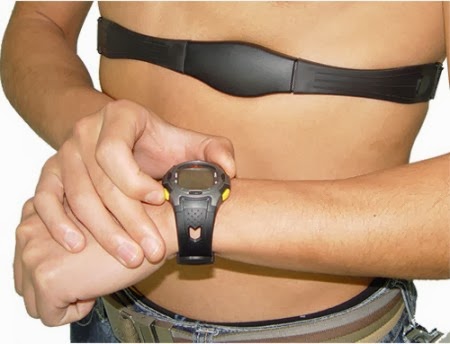
ECG-Accurate Monitors with Chest Straps – Heart monitors that come with chest straps are more often not the most accurate of heart monitors. The chest strap is strapped around your chest, a few centimeters below your breast. It contains a device that’s able to detect electrical activity of your heart and transmit it to the brain of the machine – just like an ECG. The results are shown on the display monitor, which most of the times is attached to your wrist like a watch. Others however prefer results to be transmitted through audio messages via earphones.

Upon choosing heart monitors with chest straps, you need to remember to keep the strap constantly connected to your body lest you want the heart monitor to produce inaccurate readings.

Lastly, the only alternative against buying heart monitors with chest straps are the ones that rely on pulses on your fingertips. These however do not provide readings as accurate as those with chest straps.

Heart Monitor Features – Basic and lower end models tend to display only your heart rate and maybe the elapsed exercise time as well. This of course does not provide sufficient information if you want to know exactly how much you need to improve before you can be qualified as a completely healthy individual. Higher end models will naturally offer a wider range of features – for a price. Examples of such features are – but not limited to – heart rate zone alarms, timers and number of calories burned. It may also allow users to set pre-programmed workouts along with a targeted heart rate.

Ease of Use – Lastly, you must purchase a heart rate monitor that you will have no problems of using. What good would a high end heart monitor do if it takes you an hour to operate it? Are the numbers and words appearing in the heart rate monitor readable? Can it be used in no-light situations? Are buttons well-labeled and ergonomically positioned?

To Buy or Not to Buy a Heart Monitor
Heart monitors can be especially costly, more so if you are intent on purchasing higher-end models. If you have a limited budget, you should ask yourself whether or not you truly need to buy a heart monitor. You can of course purchase one of the lower-end models but low quality heart monitors can lead to inaccurate results and that sort of defeats the purpose of buying one.

If you are intent on purchasing a heart monitor, you need to ask yourself another question: do you need to make a solo purchase or is it alright with you to use the heart monitor that comes as a built-in feature of a treadmill? Lastly, you should remember as well that you can always pay your doctor regular visits and have him monitor your heart rate for you.


FOOD POISONING


Introduction:

Food poisoning is an acute gastroenteritis caused by the consumption of a food material or a drink which contains the pathogenic micro organism or their toxins or poisonous chemicals.Food poisoning is common in hostels,hotels,communal feedings, and festivel seasons.

A group of persons will be affected with same type of symptoms ,and they give a history of consumption of a common food before few hours.

Types of food poisoning

1) Bacterial food poisoning:

Here the micro organisms called bacteria are responsible.The food material may contain the pathogenic bacteriae or their toxin and will be ingested along with the food.

2) Non bacterial food poisoning:

Due to the presence of toxic chemicals like fertilizers,insectisides,heavy metals and ect.

Since bacterial food poisoning is common it is discussed here.

Bacterial food poisoning:

All bacteria are not harmful.There are some pathogenic bacteria which secrete toxins and cause clinical manifestations.These organisms enter the human body through food articles or drinks.

How food poisoning occures:

1) Presence of bacteria in the water.

2) The raw materials for the food may contain toxins.

3) Premises where the food is prepared may contain micro organisms or toxins.

4) Food handlers may have some infectious diseases.

5) Some animals like dogs,rats may contaminate the food.

6) If prepared food is kept in the room temperature for a long time and heated again can make a chance for food poisoning.

7) Purposely some body mixing toxins in the food.


Some common bacterial food poisonings.

1) Salmonella food poisoning:

There are three different varieties of salmonella bacteria.(salmonella typhimurium,salmonella cholera suis,salmonella enteritidis) These bacteria are present in milk, milk products and eggs.  Symptoms of this food poisoning include nausea, vomiting and diarrhoea.  Fever is also common.

2) Botulism:

This is the dangerous type of food poisoning caused by clostridium botulinum.   The spores of these organisms are seen in the soil and enters the human body through pickles and canned fish ect.Compared to other food poisonings here vomiting and diarrhoea are rare Mainly the nervous system is affected.The symptoms starts with double vision,numbness with weakness.Later there will be paralysis with cardiac and respiratory failure ending in death.

3) Staphylococcal food poisoning:

It is caused by staphylo coccus aureus. These organisms usually cause skin troubles like boils and eruptions.It causes mastitis in cow.Through the milk and milk products it enders and causes gastroenteritis.There will be vomiting,abdominal cramps with diarrhoea.

4) Closteridium food poisoning:

This is caused by closteridium perfringens.They are present in stool,soil and water. They enter the body through,meat,meat dishes and egg ect.If food articles are cooked and kept in room temperature for a long time and heated again before eating can result this food poisoning.Symptoms include vomiting ,diarrhoea and abdominal cramps.

5) Bacillus cereus:

The spores of these organisms can survive cooking and causes enteritis.  Diarrhoea and vomiting is common in this infection.


How to investigate food poisoning?

1) Examine each and every person affected.

2) Water sample should be tested.

3) Kitchen, store room and food samples should be examined.

4) The cook and food handlers should be questioned and examined.

5) Samples of vomitus and stool of all victims should be tested to identify the bacteria.


How to prevent food poisoning:-

1) Only purified water should be used.

2) Hygiene should be maintained by all persons keeping contact with food.

3) Workers should use masks, cap and gloves during cooking and serving.

4) Sick individuals should not come in contact with food materials.

5) Kitchen and premises should be neat and clean.

5) Vessels should be washed with soap and hot water.

6) Should not keep the prepared food for a long time in room temperature.

7) All food materials should be kept in closed containers.

8) Animals like dog, cat, rat ect should not come in contact with food materials.

9) Vegetables should be washed before cooking.

10) Meat should be fresh and should be purchased from recognised slaughter house.